
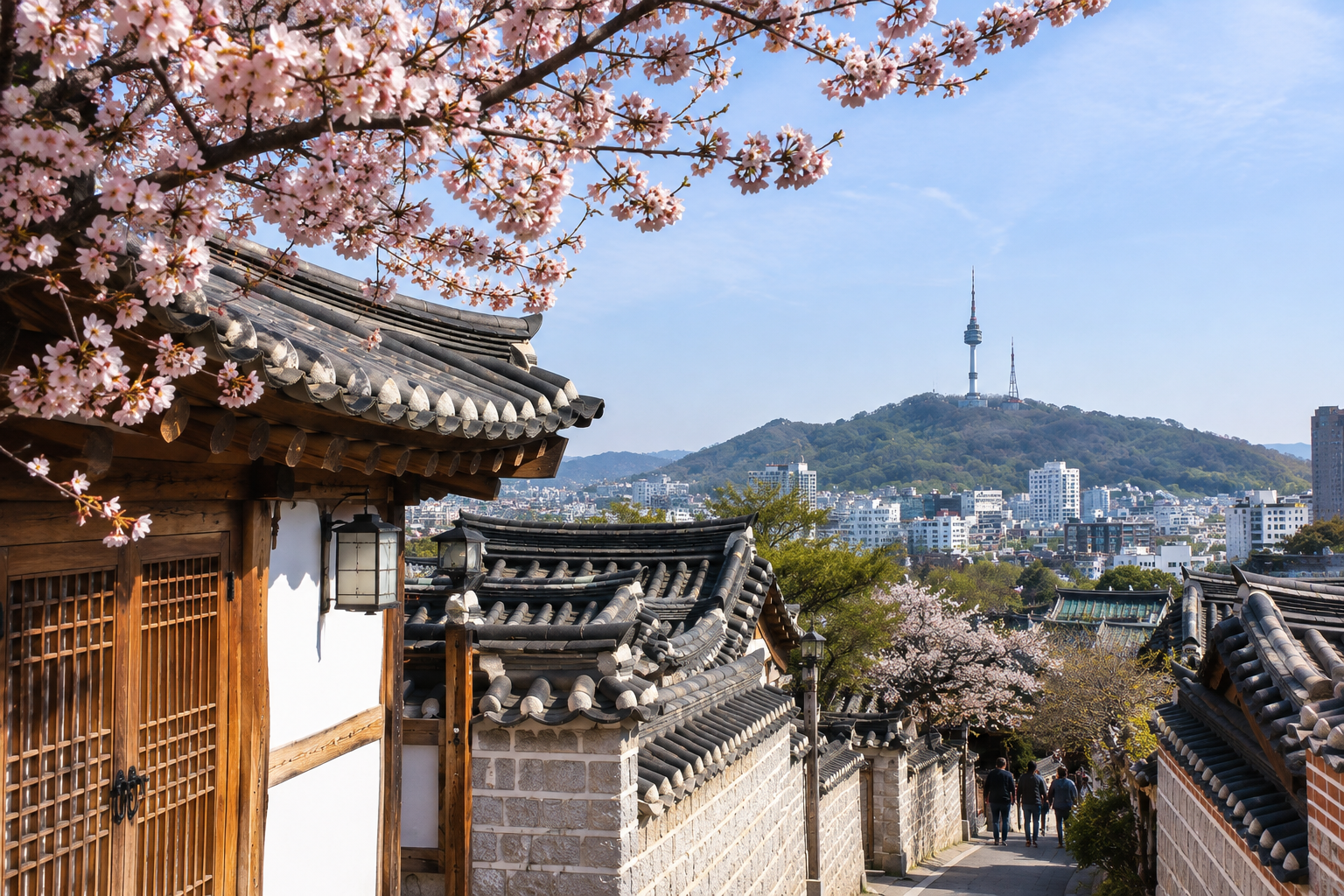
From subway etiquette to Korean food surprises, here's what you should know before your first adventure in South Korea.
Updated: November 10, 2026
Welcome to Korea — But Wait, Did Anyone Tell You About These Things?
Picture this.
You've finally arrived in Seoul.
Your suitcase is unpacked, your phone is charged, and you're ready to explore the city you've been dreaming about.
You walk into a restaurant, sit down, and wait for someone to take your order.
Five minutes pass.
Then ten.
Everyone around you seems to know exactly what to do.
And you start wondering...
Am I missing something?
Welcome to Korea!
Traveling in South Korea is exciting, but there are plenty of small cultural differences that might surprise you.
For example, did you know that many Korean restaurants have a button on the table to call a server?
Or that you might need to remove your shoes before entering certain restaurants?
And why does everyone seem to be using a different map app?
Don't worry. These little surprises are part of the adventure!
As your friendly guide to Korea, I'm here to share 10 important things you should know before visiting South Korea.
Some of these tips will save you time. Others will help you avoid awkward moments. And a few might make you fall in love with Korea even more.
Let's get started!

1. Google Maps Isn't Always Your Best Friend in Korea
You're probably used to opening Google Maps whenever you travel.
But in South Korea, you'll want to have a couple of alternatives ready.
While Google Maps can be useful for looking up places, its directions and local information may not always be as comprehensive as those available through Korean mapping services.
Meet Naver Map and KakaoMap
Two popular map services in Korea are:
Naver Map
Useful for finding restaurants, attractions, subway routes, and walking directions.
KakaoMap
Another helpful app for navigating streets and planning journeys using public transportation.
Both services offer features designed for navigating Korea, although English support can vary depending on the app and place listing.
A Simple Example
Imagine you're trying to find a tiny café hidden in an alley in Seoul.
Instead of relying only on its English name, try searching for the café's Korean name or address.
You may get a more useful result.
Local tip: Before arriving, save your hotel, the airport, and your first sightseeing destination in a Korean map app.
You'll thank yourself later!

2. You Don't Need Much Cash, But Don't Go Completely Cashless
South Korea is a highly digital society, and card payments are common.
You can use credit or debit cards at many restaurants, cafés, hotels, and shopping centers.
But there's a small catch.
Not every place accepts every international card.
Some market stalls, small businesses, and payment machines may have restrictions.
What Should You Bring?
I recommend having:
- At least one internationally enabled payment card
- A backup payment method, if possible
- Some Korean won in cash
Korea's currency is the Korean won (KRW, ₩).
You may need cash for certain purchases or transportation-card top-ups.
What About Tipping?
Here's something that might surprise travelers from the United States.
Tipping is generally not expected in Korean restaurants, cafés, and taxis.
You usually pay the amount shown on the bill.
No need to calculate an extra percentage after every meal!
Local tip: Check your bank's foreign transaction fees before traveling. A card that works internationally doesn't necessarily offer the best exchange rate.

3. A Transportation Card Can Make Your Life Much Easier
Seoul has an extensive public transportation network.
Subways and buses can take you to shopping districts, historical sites, neighborhoods, and many major attractions.
But instead of buying a new ticket for every journey, consider using a rechargeable transportation card.
What Is Tmoney?
Tmoney is one of Korea's widely used transportation-card systems.
You can generally use a Tmoney card for eligible subway and bus journeys, as well as at participating businesses.
Cards are available at many convenience stores and transportation locations.
How Do You Use It?
For a typical subway journey:
- Find the correct subway entrance and direction.
- Tap your transportation card at the entrance gate.
- Follow the signs to your platform.
- Tap again when leaving through the exit gate.
On most local bus journeys, tap when boarding and remember to tap when getting off, especially when you want to receive an eligible transfer discount.
What About the Climate Card?
Seoul also has a transportation pass called the Climate Card.
It offers time-based options for unlimited eligible public transportation journeys within its coverage area.
However, not every transportation service or route is included, so compare the coverage with your itinerary before purchasing.
Local tip: If you're staying in Seoul and expect to use public transportation frequently, compare a regular rechargeable card with available short-term travel passes.
The best choice depends on where you're going and how often you'll travel.
4. Korean Restaurants Might Work Differently Than You Expect
Here's a situation many first-time visitors find interesting.
You enter a restaurant.
You sit at a table.
And instead of someone immediately approaching to take your order, you notice a small button.
What is that?
It's a Call Button!
In many Korean restaurants, you'll find a call button on the table.
When you need assistance, pressing the button alerts the staff.
It's a normal part of restaurant service.
Other restaurants may use touchscreen kiosks or ordering tablets.
You might also notice that water, utensils, and some side dishes are available at self-service stations.
What Are Banchan?
When you order a Korean meal, you may receive several small dishes.
These are called banchan (반찬).
They might include kimchi, seasoned vegetables, pickles, or other side dishes.
Some restaurants offer complimentary refills, but policies can vary.
Three Useful Restaurant Phrases
저기요! (Jeogiyo!) — Excuse me!
이거 주세요. (Igeo juseyo.) — This one, please.
감사합니다. (Gamsahamnida.) — Thank you.
Local tip: Before ordering, check whether the menu lists a minimum number of servings. Some Korean barbecue restaurants require two or more portions of certain meats.
Also, if you have allergies or dietary restrictions, always confirm ingredients rather than relying only on pictures.
5. Sometimes You'll Need to Take Off Your Shoes
Imagine walking into a beautiful traditional Korean restaurant.
You step toward the dining area, but suddenly notice shoes neatly lined up near the entrance.
What's going on?
In Korea, removing shoes is a common practice in homes and certain traditional indoor spaces.
Why Do Koreans Take Off Their Shoes?
Traditional Korean homes often use a floor-heating system known as ondol (온돌).
Historically, people spent time sitting, eating, and sleeping on heated floors.
Even in modern homes with beds and chairs, keeping indoor floors clean remains an important part of everyday life.
Where Might You Need to Remove Your Shoes?
- Korean homes
- Some traditional restaurants
- Certain guesthouses and accommodations
- Some traditional cultural or wellness facilities
Not every restaurant follows this custom.
If you're unsure, look for signs, a shoe rack, or the behavior of other visitors.
Local tip: Wear comfortable socks when exploring traditional neighborhoods or visiting cultural experiences where shoes might need to come off.
It's a small detail, but it can make your day more comfortable!

6. Korean Food Isn't Always Spicy — But Be Careful!
When you think of Korean food, what comes to mind?
Kimchi?
Spicy rice cakes?
Bright red sauces?
Korean cuisine certainly has plenty of spicy dishes, but there's much more to discover.
Not Everything Is Spicy
If you prefer mild flavors, consider trying:
Bulgogi (불고기) — Marinated meat, often beef, with a sweet and savory flavor.
Samgyetang (삼계탕) — Chicken soup traditionally prepared with ginseng and other ingredients.
Japchae (잡채) — Stir-fried glass noodles with vegetables and sometimes meat.
Gyeran-jjim (계란찜) — Soft steamed eggs.
Kimbap (김밥) — Rice and fillings rolled in dried seaweed, with ingredients varying by type.
But There's a Surprise
Even foods that don't look particularly spicy can contain chili or spicy seasoning.
And a dish that tastes mild to one person might be overwhelming to another.
If you're sensitive to heat, here's a phrase worth remembering:
안 맵게 해주세요. (An maepge haejuseyo.)
Please make it not spicy.
Keep in mind that some dishes are prepared in advance, so the restaurant may not be able to change the spice level.
Local tip: Be especially careful if you're vegetarian or have seafood allergies. Some kimchi, soups, and sauces contain fish sauce, shrimp paste, anchovy broth, or meat-based ingredients.
7. Public Transportation Has Its Own Unwritten Rules
Korea's public transportation system can be a convenient way to explore.
But there are a few habits worth knowing before your first journey.
Keep Noise at a Considerate Level
Many subway passengers prefer a relatively quiet environment.
Avoid loud phone conversations, and use headphones when listening to music or watching videos.
Pay Attention to Priority Seating
Subway trains and buses have designated seats for passengers who may need them, such as older adults, people with disabilities, pregnant passengers, and others with mobility needs.
Some trains have separately designated pregnancy-priority seats.
Pay attention to the signs and leave priority seating available for those who need it.
Let Passengers Exit First
When the subway arrives, stand aside and allow passengers to get off before boarding.
This makes the process smoother for everyone.
Don't Block the Doors
If you're traveling with a large suitcase, keep it out of the way of other passengers whenever possible.
Local tip: A subway station may have several exits, sometimes leading to very different streets or blocks.
Checking the correct exit number in advance can save you a surprisingly long walk.

8. Convenience Stores Are Mini Travel Lifesavers(link)
If you're visiting Korea for the first time, don't overlook convenience stores.
They can be incredibly helpful.
You'll find familiar chains such as CU, GS25, and 7-Eleven in many neighborhoods.
But they offer more than just bottled water and snacks.
What Can You Find?
Depending on the location, you may find:
- Ready-to-eat meals
- Triangle kimbap
- Instant ramen
- Coffee and drinks
- Toiletries and everyday essentials
- Small snacks and desserts
Some branches also have microwaves, hot water dispensers, or places to sit.
A Fun Korean Convenience Store Challenge
During your first visit, pick three things:
One snack you've never seen before.
One Korean drink.
One simple meal or dessert.
You might discover your new favorite travel snack!
One Thing to Remember
Not all convenience stores have seating or identical facilities.
Follow the store's instructions when preparing food or disposing of packaging.
Local tip: If you're not sure how to open a triangle kimbap package, look for the numbers printed on the wrapper.
They usually show you the order in which to pull the packaging apart.
Yes, even a convenience-store snack can become a fun little cultural experience!
9. Korean Etiquette Is About Being Considerate, Not Perfect
You don't need to memorize an entire book of etiquette before visiting Korea.
But understanding a few common habits can help you feel more comfortable.
Use Two Hands in Polite Situations
When giving or receiving something in formal or respectful settings, using both hands is a common polite gesture.
You'll notice that social interactions can change depending on the situation, relationship, and age of the people involved.
Learn a Simple Greeting
You don't need to speak fluent Korean to make a friendly impression.
Start with:
안녕하세요. (Annyeonghaseyo.) — Hello.
And:
감사합니다. (Gamsahamnida.) — Thank you.
These two phrases can be useful throughout your trip.
Be Respectful When Taking Photos
Korea has many photogenic cafés, neighborhoods, temples, and public spaces.
But remember that not everyone wants to appear in your photos.
Ask permission before taking close-up pictures of strangers or photographing people in private settings.
Follow photography restrictions at museums, cultural sites, and other venues.
Be Mindful of Personal Space and Local Rules
Some places have special rules about food, shoes, noise, or photography.
When in doubt, read posted signs and observe what's happening around you.
Local tip: Don't worry about acting exactly like a local. Courtesy, patience, and willingness to learn matter far more than perfect etiquette.
10. Korea Is Easy to Explore — But Planning Still Matters
South Korea has many convenient travel services, but a little preparation can save you a lot of trouble.
Check Entry Requirements Before You Travel
Depending on your nationality and travel status, you may need a visa, K-ETA, or arrival card.
As of November 2026, the temporary K-ETA exemption for designated eligible countries and regions is scheduled to remain in effect through December 31, 2026.
This exemption doesn't apply to every traveler.
If you need an e-Arrival Card, you can complete it on the official website beginning three days before arrival, based on Korean Standard Time.
Important: The official Korea e-Arrival Card is free. Be cautious of unofficial websites requesting payment.
Official sources:
Check the Weather
Korea has distinct seasons.
Summers can be hot, humid, and rainy.
Winters can be very cold, especially in inland areas.
Spring and autumn are often popular for outdoor sightseeing, but conditions vary.
Check the weather forecast shortly before departure.
Save Important Emergency Numbers
112 — Police
119 — Fire and ambulance emergencies
1330 — Korea Travel Helpline
The Korea Travel Helpline can provide travel information and multilingual support.
Don't Overplan Every Minute
This might be the most important tip of all.
Yes, Korea has beautiful palaces, impressive shopping districts, exciting food markets, and endless cafés.
But some of your favorite memories might come from things you never planned.
A quiet neighborhood.
A friendly conversation.
An unexpected dessert.
A beautiful street you discovered while walking to the subway.
Leave a little room for surprises!
Local tip: Choose two or three priorities per day, depending on distance and your travel style. You can always add more activities if you have the time and energy.
Bonus: Five Korean Words That Make Traveling Easier
Save these expressions on your phone!
| Korean | Pronunciation | English |
|---|---|---|
| 안녕하세요 | Annyeonghaseyo | Hello |
| 감사합니다 | Gamsahamnida | Thank you |
| 저기요 | Jeogiyo | Excuse me! |
| 얼마예요? | Eolmayeyo? | How much is it? |
| 화장실 어디예요? | Hwajangsil eodiyeyo? | Where is the restroom? |
Don't worry too much about perfect pronunciation.
A friendly smile and a little effort can go a long way.
Quick Checklist: Before You Visit South Korea
Here's a simple checklist to help you prepare for your trip.
Travel Documents
- Check your passport and entry requirements.
- Confirm whether you need a visa, K-ETA, or arrival card.
- Save your hotel reservation and address.
- Keep copies of important travel documents.
Transportation and Technology
- Download Naver Map or KakaoMap.
- Install a translation app such as Papago.
- Arrange mobile internet access.
- Learn how transportation cards work.
Money and Everyday Life
- Prepare an international payment card.
- Carry some Korean won.
- Learn a few basic Korean expressions.
- Review common restaurant and subway etiquette.
Stay Comfortable
- Check the weather forecast.
- Pack comfortable walking shoes.
- Save important emergency contacts.
- Leave free time in your itinerary.
Frequently Asked Questions About Visiting Korea
Is South Korea a good destination for first-time international travelers?
South Korea can be an appealing destination for first-time travelers, especially those interested in food, culture, shopping, history, and urban exploration.
Major cities have extensive transportation networks and many visitor services. Still, it's worth planning for language differences, payment issues, and local transportation rules.
Can I travel to Korea without speaking Korean?
Yes. Many visitors travel successfully without speaking Korean.
English signs are common at major transportation hubs and tourist attractions, although language support can be more limited in local neighborhoods.
A translation app and a few simple Korean phrases are helpful.
Do I need cash in South Korea?
You can use cards at many businesses, but it's wise to carry a small amount of Korean won for places that have limited payment options.
Do I need to tip in Korea?
Tipping is generally not expected at everyday restaurants, cafés, and taxis.
What is the biggest mistake first-time visitors make?
One common planning mistake is trying to fit too many activities into one day.
Allow enough time for travel between neighborhoods, meals, rest, and unexpected discoveries.
Final Thoughts: Don't Just Visit Korea — Experience It!
Your first trip to Korea will probably include a few surprises.
Maybe you'll discover that ordering food works differently from what you're used to.
Maybe you'll accidentally take the wrong subway exit.
Or maybe you'll find yourself sitting in a tiny café, wondering how a simple cup of coffee became one of your favorite travel memories.
That's the beauty of visiting somewhere new.
You don't need to understand everything before you arrive.
You just need to be curious, respectful, and open to learning.
Korea is waiting for you! 🇰🇷
So bring your camera, your comfortable shoes, and your sense of adventure.
And remember...
어서 오세요! (Eoseo oseyo!) — Welcome!
We're happy you're here.
Keep Exploring Korea With Us!
New to our blog? Start with these guides:
Episode 01: First Time in Korea? Start Here!
Your complete introduction to planning your first Korean adventure.
Episode 02: Your First 24 Hours in Korea
A step-by-step guide from Incheon Airport to your first Korean meal and morning in Seoul.
Coming Up Next — Episode 04
Korean Convenience Stores for Beginners: What to Buy, Eat, and Try!
Have you ever wondered why Korean convenience stores are so popular?
In our next article, we'll explore Korean snacks, instant ramen, triangle kimbap, fun drinks, and the little things that make convenience stores such an interesting part of Korean everyday life.
Let's discover Korea together, one experience at a time!
Which Korean custom surprises you the most? Share your thoughts in the comments!
Official Travel Resources
- Korea Tourism Organization: https://english.visitkorea.or.kr/
- K-ETA: https://www.k-eta.go.kr/
- Korea e-Arrival Card: https://www.e-arrivalcard.go.kr/
- Incheon International Airport: https://www.airport.kr/
Travel information reviewed November 10, 2026. Government requirements, transportation policies, and local services can change. Always check official sources before traveling.
Tags: South Korea Travel Tips, Things to Know Before Visiting Korea, Korean Etiquette, Korea Travel Guide, First Time in Korea, Seoul Travel Tips, Korean Culture, Korea for Beginners
답글 남기기